How to Wash Organic Baby Clothes: A Care Guide
JSYAS Baby Team · 06/09/2026
That soft, brand-new onesie sitting in the drawer isn't ready for your newborn's skin just yet. Even organic cotton clothing picks up residue during manufacturing, packing, and shipping — nothing harmful in normal circumstances, but enough to matter for skin as thin and reactive as a newborn's. A proper first wash, and the right routine after that, keeps organic cotton doing what it's meant to do: staying soft, breathable, and gentle wear after wear.
Why You Should Always Wash Baby Clothes Before First Wear
New clothing, organic or not, travels through a lot of hands and processes before it reaches you — dyeing, finishing treatments, packaging, and general handling in transit. None of this is typically dangerous, but a newborn's skin is thinner and more permeable than an adult's, which is exactly why pediatric guidance generally recommends washing everything before the first wear rather than assuming "new" means "ready."
For organic cotton specifically, the fabric itself is already free of the pesticide residues and synthetic treatments found in conventional cotton — that's the whole point of choosing it. But a first wash still matters for removing any leftover residue from manufacturing and handling, and it also softens the fibers, since organic cotton can feel slightly firmer right out of the packaging than after its first cycle.
The Right Way to Wash Organic Cotton Baby Clothes
Organic cotton rewards a gentler routine than you might use for adult laundry:
- Turn garments inside out before washing — this protects any prints, embroidery, or outer finish from friction
- Close any snaps or zippers first, so they don't snag on other fabric
- Use cold or lukewarm water on a gentle cycle — heat is the main thing that shortens the life of organic cotton fibers
- Skip fabric softener entirely — it coats the fibers with a residue that actually reduces the natural softness organic cotton is known for, and can trap odors and detergent film against the skin
- Add an extra rinse cycle, especially for the first few washes — this matters more for newborn clothing than almost anything else on this list, since leftover detergent residue is one of the more common causes of mild skin irritation in young babies
Choosing a Safe Detergent for Newborn Skin
Not every "gentle" detergent is actually formulated for sensitive newborn skin. Look for detergents that are fragrance-free or use minimal, hypoallergenic fragrance, free of optical brighteners (added to make clothes look "whiter" but unnecessary and occasionally irritating), and marketed specifically for baby or sensitive-skin laundry rather than general "gentle" adult formulas.
If a rash or redness does appear after a wash, it's worth switching detergents and doing a plain-water rewash of the affected items before assuming it's the fabric itself — detergent residue is a far more common culprit than the cotton.
Drying and Storing Organic Baby Clothes
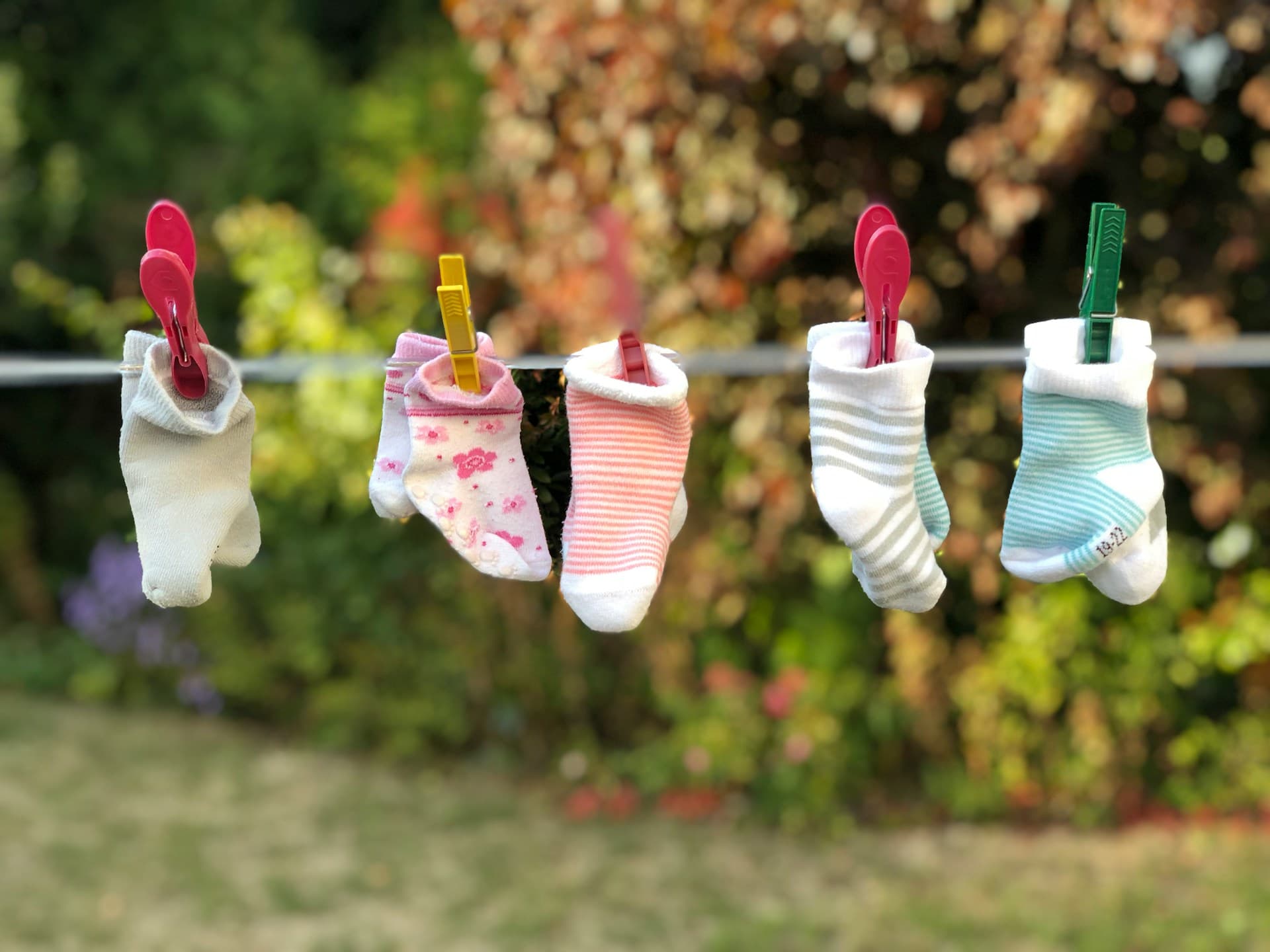
Line drying is the gentlest option and helps organic cotton hold its shape longest, but a tumble dryer on low heat is perfectly fine for everyday convenience — just avoid high heat settings, which is where most shrinkage and fiber breakdown happens over time. Store clean, dry clothing folded rather than tightly packed, since organic cotton (like any natural fiber) breathes better and resists mustiness with a bit of airflow.
Washing Organic Baby Clothes in the UAE's Climate
Dubai and the wider UAE bring their own laundry considerations. High humidity for much of the year means clothes can hold onto dampness longer than in drier climates, so a full dry cycle (or genuinely thorough air-drying indoors with good airflow) matters more here than it might elsewhere — lingering dampness is where mildew smell creeps in fastest. If you're line-drying indoors during the more humid months, a fan or air-conditioned room speeds things up meaningfully compared to a closed, still room.
Frequent outdoor time also means more sunscreen, sand, and sweat to wash out during the warmer months — none of which changes the core washing routine above, but it's worth an extra rinse cycle during peak summer if you notice clothes coming out of the dryer feeling less soft than usual.
Frequently Asked Questions
Do I really need to wash organic cotton baby clothes before the first wear?
Yes. Even organic cotton picks up residue from manufacturing, packaging, and handling before it reaches you. A first wash removes this and also softens the fibers, which can feel slightly firmer straight out of the packaging.
Can I use fabric softener on organic baby clothes?
It's best to skip it. Fabric softener coats cotton fibers with a residue that reduces the natural softness organic cotton is chosen for in the first place, and can leave a film against sensitive newborn skin.
Why does my baby's organic cotton clothing feel less soft after a few washes?
This is usually caused by detergent residue or high heat during drying, not the fabric itself. Try an extra rinse cycle and a lower heat setting, and avoid fabric softener — organic cotton should stay soft with a gentle wash routine.
What temperature should I wash organic baby clothes in?
Cold or lukewarm water on a gentle cycle is best. Heat is the main factor that shortens the life of organic cotton fibers and can also cause shrinkage over repeated washes.
Is it normal for my baby to get a rash from new clothing?
Occasional mild redness can happen with any new fabric, and detergent residue is a more common cause than the fabric itself. If a rash appears, rewash the item in plain water, switch to a fragrance-free detergent, and consult your pediatrician if it doesn't clear up or seems severe — this guide is general information, not medical advice.
If you're building out a newborn's wardrobe from scratch, our organic cotton vs. regular cotton guide covers why the fabric choice matters in the first place, and our newborn essentials checklist is a useful reference for what else to have ready before baby arrives. Browse our organic baby clothing if you're stocking up.
A little extra care in the wash routine goes a long way toward keeping organic cotton doing exactly what it promises — soft, breathable, and gentle against your baby's skin, wash after wash.
Keep Reading
Newborn's First Bath: When and How to Start
A calm, practical guide to a newborn's first bath — when to start, sponge vs. tub baths, and UAE family bathing traditions worth knowing.
Baby's First Haircut: When and How to Do It
A calm, practical guide to your baby's first real haircut — the right age, cultural traditions, and tips for keeping the moment a good one.
Non-Toxic Baby Products: What Materials to Pick
"Non-toxic" alone doesn't mean much — here's what materials (silicone, wood, glass, stainless steel) actually earn that label, and which to skip.